Showing posts with label Book reviews. Show all posts

Sunday, 7 November 2021

Black and British: A Forgotten History by David Olusoga

 As a Nigerian who came to England at a young age, I can relate to Olusoga as he tells his personal story of experiencing racism although my family did not go through the racism that he went through. The only time in my youth I ever felt racism was when I was waiting at a bus stop and some white boys threw eggs at me. Whether it was racially motivated I cannot say for certain but I sure felt hatred for those who did it.

 In secondary school, I felt that teachers loved me and if I ever got into any trouble I always got off lightly compared to my other black friends. I loved history class because the teacher that taught us was also our basketball coach. He taught me about principles and being disciplined and treated everyone the same. He didn’t care about the color of your skin but by how much you worked and took his instructions seriously.

 He didn’t hesitate to kick you out of the training session but if he saw that you were trying and had no talent, he had a lot of patience. In his history class, I learned about the Tudors and Henry Viii and a few other things but one thing that was strikingly absent was the role of black people in Britain before the slave trade. 

It was refreshing that Olusoga traces the history of black people in Britain from Roman Britain to the Tudors and then to the positive contribution of black troops in the first and second world war. Olusoga aims to remind us all that British history is a shared history and this book is an uncovering of black British history.  

The book is comprehensive as Olusoga covers a wide period of history as he traces the connections of Black people from Britain, America, and Africa. He details the impact of the slave trade on Africa and focuses on certain individuals who had a significant impact on the abolition of slavery that is often forgotten. 

The book is powerful and it accomplishes what it sets out to achieve which is to uncover the forgotten history of Black people in Britain and in the British empire. 

K.Oni

Monday, 1 March 2021

Book Review: Blackout: How Black America Can Make Its Second Escape from the Democrat Plantation

In Blackout, Candace Owen argues that the democratic party has not been kind to the black community. She details how the democratic party has had a long history of racism and questions the democratic policies towards black America.  

The book consists of 11 chapters where Owen discusses her views on topics such as Conservatism, Feminism, Faith, Media, Slavery, Family, Overcivilisation, Socialism and Government Handouts, Education, Culture, and Excuses.  


Owen views the Feminist movement (#Metoo) as toxic and highlights the bias of the media to favor the Democratic party’s narrative. Owen issues a challenge to Black America that it is time for a black exodus from victimhood, dependency, and from miseducation. 


She urges black voters to vote for Trump as she believes that President Trump is the president who will accomplish change for the Black community.  


Owen is a rising voice in the political and social media arena against the BLM movement and an advocate for conservatism. She offers a different perspective and urges Black America to free itself from the democratic party's shackles.  


K.Oni

Friday, 28 February 2014

Book review: Seeking Allah, finding Jesus: A Devout Muslim Encounters Christianity

In Seeking Allah, finding Jesus: A Devout Muslim Encounters Christianity, Nabeel paints a wonderful picture of growing up in an Islamic family. For an outsider, one can see the appeal Islam has on its adherents. The devotion of the parents for their child to have a thorough knowledge of the Quran shows the love and care the parents have for their child to grow up in the knowledge of Allah. Nabeel's mother was a daughter of missionaries and his father 'was a self-sacrificial, loving man who bore the noble name of Qureshi. Qureshi are the tribe of the prophet Muhammad.

Nabeel in this book shares his experience of growing up in an Islamic family in the west and writes, “The mystical beauty of Islam that enchants billions cannot be grasped by merely sharing facts.” You had to live it which is something that we outsiders cannot comprehend. Nabeel loved Islam, and before he was six he had read the whole Quran. In high school Nabeel was ready to defend the Islamic view of Jesus against any Christian, but at university, everything he thought he knew about Christianity and the Quran would be challenged.

In my experience at university, I spoke with many Muslims about Jesus and the bible. The Muslims would repeatedly bring the same objections and declare that the bible has been corrupted, and that no where in the bible does Jesus say that I am God. This response was universal from the Muslims I spoke too. I found a possible explanation from Nabeel's experience why this may be the case. Nabeel writes, 'Now I knew as did David (Christian) and Zach (Buddhist), that I had not studied Islam with as much scrutiny as I had Christianity. But for me, as for many Muslims, an uncritically reverential and fulsome assessment of Islam was a given.'

For the Muslims I was speaking too, it was clear that most of them had an uncritically reverential and fulsome assessment for Islam. Perhaps like Nabeel, many had innocently accepted the world that have been built for them by their family and culture, a world in which Islam was unassailable.

For my Muslim friends, Islam was unassailable and to question it would be to show a disrespect for authority.  

For example, in Pakistani culture parents rarely said I love you. 'Love is implicit and understood, expressed through provision by the parents and obeisance by children.' Confessing Islam was showing obeisance to his parents but denying it would portray the opposite.

At university, Nabeel became friends with David wood who was a Christian, and through their deep friendship, both engaged in religious discussions which challenged Nabeel to review what he thought he knew about Jesus and the Quran. This discussions happened in the context of sharing life together. Their friendship was more than just religious discussions, they deeply cared about each other whether or not they saw eye to eye regarding each other's religious faith.  


In order to show that the message of the Quran was true and divinely inspired, Nabeel decided to hold the Quran under the same scrutiny which he had applied to the bible. His findings were life changing. In a large Muslim prayer hall, broken before God, Nabeel in his mind began to question everything he thought he knew about God. “But maybe You are showing me that the Quran is not Your word after all? So much of what I've been taught about it has turned out to be false. I was taught that it has never been changed, but hadith and history show that it has. I was taught that it has supernatural knowledge of science and the future, but when I asked you to help me see it with my own eyes, I could find none. So much that I thought I knew about the Quran simply is not true...”  

I invite you to pick up this book whether you are a Christian, Muslim, agnostic, Buddhist, atheist or etc, because this book will challenge, excite and intrigue your curiosity on what it means to follow Jesus. If you are a Muslim, ask yourself the same questions Nabeel asked himself about the Quran, Muhammad and Jesus. If you are a Christian, can you identify yourself with David wood? Do you understand the cost of what it means to follow Jesus for yourself and especially for those who are from an Islamic background? If you are an atheist, agnostic and Buddhist, are you willing to follow the evidence fearlessly wherever it may lead. 

You can get a copy of Seeking Allah, Finding Jesus at Amazon

K.Oni

Sunday, 9 June 2013

Book review: Beautiful lies - You Are More Than *What Men Think *What the Mirror Reflects *What Magazines Tell You

book title frontLies can be pretty, but Truth is beautiful, writes Jennifer Strickland a former professional model who knows all about the lie and distortions the culture feeds young women. At just seventeen years of age, Jennifer met with Nina Blanchard, the legendary empress of the West Coast modelling world and signed a contract with her. Nina named Jennifer, the “Face of the Nineties,” and was introduced to Steven Spielberg, Eileen Ford, Georgio Armani and Patrick Demarchelier, the favoured photographer of Princess Diana. Jennifer reflected that this interaction was a continuation of the first beautiful lie that she believed, namely that 'if a man or woman thinks I'm pretty, I am. If he or she thinks I have potential, I do. If they want me, I'm worth wanting.'

Are you what man thinks of you? Or do you think that men could measure your value? I (Ken) say to you, that don't be so hasty to deny that you are currently pandering to men's opinions, but search your heart and scrutinize your motives to see if this men/society pleasing trait is well sipped into your veins.

“In this book you will find five beautiful lies which leaves our hearts locked at the bottom of the sea, the splendour within us growing dull and grimy like old, tarnished stones in a treasure chest,” writes Jennifer Strickland about the content of her book which is more an invitation into her heart and into yours. Accompanied with these beautiful lies are five solid truths to help you disable and dismiss the lies that you have come to accept about yourself and embrace the only opinion that matters, namely what your heavenly Father thinks.

It is a languishing cry that over 80 percent of women are unsatisfied with their appearance and that seventy percent are actually depressed about their size and shape. And perhaps, this is because we have a generation of mothers enslaved by the mirror who are trying to raise a generation of princesses in the image of worldly beauty. In one speaking event, Strickland recounts the comments written haphazardly in multicoloured ink all over the mirrors by young girls, which says: I will never be beautiful. I am ugly. No one loves me, not even my father. I am fat and nasty. I will never heal from my rape. Everybody hates me. I am not lovable, not even by God. I am worthless.

What lies are you believing as a woman? Are you identifying your worth with your appearance? Have you forgotten that 'the average model is thinner than 98% of American women?' Have you allowed the truth of the Word to enter in, so that you can discern the lies, contradictions, and confusions of the magazines?

But it is not only men who are telling women and girls that they have to be pretty enough, but it is women who run the fashion magazines, from the head editorial staff to those who create the content and edit the magazines that are preaching the message that 'women have to change to be pretty enough. That while their flesh is their value; ultimately, their flesh has no value. It's usable, replaceable, and disposable, (pg 97).'

Jennifer Strickland does a wonderful work in identifying the 'beautiful lies' which often cripples a woman from fulfilling their God given potential and she offers a stunning truth on combating such thinking disorders with the Word of truth, namely the scriptures. Jennifer has first hand experiences on the beautiful lies which she herself once believed; and now she is an instrument of God in disarming such lies and replacing them with heavenly truth. 


I highly recommend this book for women of all ages as a book either for yourself or for counselling other women in recognising the 'beautiful lies,' which they have accepted from the world. This book is relevant because the issue is present all across the mind of women, who are in need of affirmation, and to be encouraged to root their identity and worth in Christ alone. That they are beloved daughters and temple of the Holy Spirit.  

You can place an order here for the book: http://harvesthousepublishers.com/book/beautiful-lies-2013/

K.Oni

Monday, 29 April 2013

Book review: Getting your husband to talk to you


If you wish that your husband will talk to you – or talk to you more often- or talk to you on a deeper level then this book is for you. What it offers are principles and techniques that the authors claim has worked time and time again in getting husbands who typically don’t talk – or don’t talk much – to begin sharing their thoughts, feelings, and emotions with their wife.

In one of the stories told about a wife's complaint to Bob (one of the authors) that her husband won't talk, she challenged Bob to see if he could get her husband to talk and then remarked that “It won't do any good.” Bob decided to take her up on her dare to see if he could get the woman's husband to talk. Bob met up with the woman's husband and to his surprise the man began to talk and for the next thirty minutes Bob realised that he had said less than a dozen words. Wondering why the guy's wife had made such accusation that he wouldn't talk, Bob mused that perhaps maybe there aren't any men who cant talk. Maybe there are only some men who have never been listened to.

The book is full of these kind of stories, advice which the author have given and as a result bore real fruit.

The authors offer seven reasons why men won't talk to their wives and I'll list just a few. Buy the book when it comes out to read the rest and the reasons why the authors have chosen these seven reasons why men won't talk to their wives. The reasons below are not listed in numerical order as it is in the book:

1. Men don’t talk because they are afraid of their thoughts and ideas will be criticized and rejected.
2. men don’t talk because they do not believe they are as verbally skilled as their wives.
3. Men don’t talk because they don’t want to appear emotionally weak.
4. Men don’t talk because they don’t believe that they will be listened to.

This book emphasises the necessity for a wife to have a listening ear. A wife needs to take the advice James gave to his community when he wrote, “my dear brothers and sisters, take note of this: Every one should be quick to listen, slow to speak and slow to become angry.” This is because words are little pieces of a woman's soul and women would rather talk just to talk but men will talk if they are already doing something else. A wife who has a silent husband at home will need to understand this and perhaps join her husband in doing activities that he likes to do.

As well as listening, asking the right questions is instrumental in getting one's husband to talk. Always start with questions people are comfortable to talk about. A good practical advice I believe that is commendable for all situations.

The next quotation comes with an 18+ warning. 'Many wives have long desired for their husbands to understand the vital place of foreplay in preparing them to engage in sexual intimacy. One of the most common complaints wives have is, “he is so eager to reach the main event for him that he doesn't take the time to bring me along with him”. In a similar manner, your husband requires conversational foreplay in order to respond to your desire for a deeper discussion.'

Ask him questions that he is comfortable with. Do not be eager to 'reach the main event' of heart to heart conversation. Take the time to bring him along. This is an advice I personally will heed to when conversing with men in relation to discipleship and mentoring.

Bob and Cheryl Moeller suggest seven questions that can reach his heart. I will list a few. 1. What is the most fulfilling aspect of your job? 2. Who is the one person you admire most and why? 3. What’s the best compliment anyone ever paid you?

This book does not shy away from addressing heart issues like sin. A women is not always to be blamed for her husband's silence and likewise a wife needs to examine her own heart so that she is not harboring bitterness towards her husband due to his emotional neglect of her communicative needs. Bitterness writes the married couple 'is a settled decision not to forgive, and it builds enormous walls in relationships.' If your husband senses that you still hold things against him and won't forgive him of his past mistakes then he is going to keep silent or not want to talk to you. 'Bitter roots produce bitter fruits in a marriage.'

On a more lighter note, 'make food and men will arrive. We have often jokingly (actually not so jokingly) tell single women interested in attracting a man that one of the most effective strategies involves just one word: food. “make it and they will come.”

At the end of each chapter there are discussion questions to talk through which indicates that this book is available for small-group use.

I am not a husband and not a wife so what did I gain from reading this book and why did I continue to read it? First of all this book is beneficial to both genders in two ways. 1. Most of the advice offered are suitable for both genders and it is rooted in scripture and experience. 2. One day if the Lord wills, I too will become a husband unless my portion is that of Christ and Paul of which I am content with. O to be like Christ in every way and of that apostle who was born at an untimely hour. As a husband I will understand the necessity of opening my heart to my dear sweet Christ saturated wife and of the greatness my conversation nourishes her feminine want for dialogue. I will spot quickly the faults in me of why I am neglecting her and spot the lame faults in her which have created a barrier in me. Also in addition, I can offer advice to husbands in keeping them accountable whether they are neglecting this vital duty of communication with their God ordained wives.

If you have a silent husband or if you are single and want to understand issues in marriage to do with communication, I beseech you to buy this book when it comes out. It offers godly advice and does not shy away in dealing with sin. It offers the gospel.


K.Oni

Tuesday, 16 April 2013

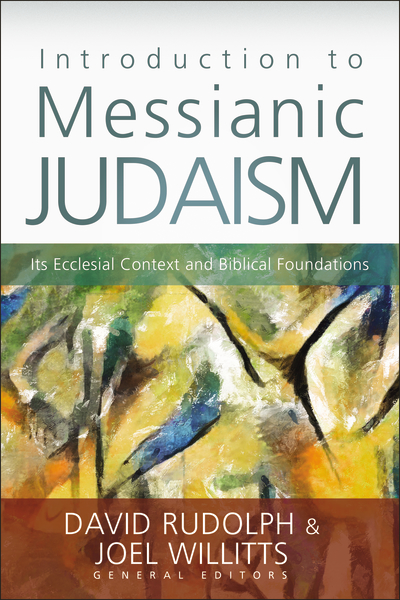
Book review: An introduction to Messianic Judaism


To love Jesus is to love him in the fullness of his divinity and humanity, and being a Jew is fundamental to his humanity. As Paul said, "Remember Yeshua the Messiah, raised from the dead, descend from David. This is my gospel."  

According to the authors, Introduction to Messianic Judaism is written primarily for rabbis and pastors, informed laity, undergraduate students, and seminarians in the messianic Jewish, mainstream Jewish, and gentile Christian world.

I am part of the Christian gentile world interested in the Messianic Jewish community, because after all, Christianity arose from a Messianic Jewish milieu. An understanding of Messianic Judaism can only help a gentile Christian understand their own faith better. 

This book comprises of a series of essays from a Messianic Jewish standpoint with the aim of bridging the gap between the Jewish people and the church, so that the church can better understand its origin and identity; and also that the Jewish people can embrace their messiah without forsaking their lives and calling as a Jew and continue their national duty before God.

Messianic Judaism is defined as a movement of Jewish congregations and congregation-like groupings committed to Yeshua (Jesus) the Messiah that embrace the covenantal responsibility of Jewish life and identity rooted in Torah, expressed in tradition, renewed and applied in the context of the New covenant. This definition is different from the popular view that believes that a Messianic Jew refers to any Jewish believer in Yeshua.

What difference does this definition make for a gentile Christian? It makes all the difference because instead of encouraging Jews who embrace Jesus to discard their old Jewish practice, we are to encourage them because, ‘it is God’s desire for Jewish people not to assimilate, but to continue to be Jewish,’ p47. This does not mean that there are two churches because the faith that unites the Messianic Jewish community and gentile Christian Church is the faith in Yeshua. Therefore, 'together the Messianic Jewish community and the Christian Church constitute the ekklesia, the one Body of Messiah, a community of Jews and Gentiles who in their ongoing distinction and mutual blessing anticipate the shalom of the world to come.' p34

For further understanding on this relationship between Messianic Jews and the Gentile Christian world, one can turn to chapter 12,  where Daniel C. Juster, the executive director of Tikkun International, an international network of Messianic Jewish synagogues and emissaries describes the Messianic Jewish community’s relationship with their Gentile Christian Family. Dan Juster takes issue with the view of Christian supersessionism, the view that the church replaces Israel as God’s people. This view creates tension for Messianic Jews as they relate to the Gentile Christian world, therefore the best way to understand the Jewish Messianic movement’s perspective on their relationship with their Gentile Christian family is by the terms of interdependence and mutual blessing. This view is more acceptable to Jews today and more biblical, because it maintains God’s irrevocable covenant relationship with the Jewish people. Although there is one ekklesia, yet it exists in two distinguishable expressions.

There are other chapters of interest such as Messianic Jews and the Jewish world, and Messianic Jews and the land of Israel. Chapter 8 titled, Messianic Judaism and women presents Rachel Wolf’s first person perspective on women in the messianic Jewish community. Chapters 14 to 27 deals specifically with the Church and Messianic Judaism. 

Overall this book is a magnificent starting course that introduces the reader to the world of Messianic Judaism, highlighting what the main discussions are, and presenting sound biblical reasons why Messianic Jews should embrace their Jewish heritage.  

Buy introduction to Messianic Judaism: http://zondervan.com/9780310330639

K.Oni

Tuesday, 22 January 2013

Book review: The Conviction To Lead


 People are captivated by the idea of leadership. For the last two decades, the public’s fascination with leadership has grown exponentially. I studied leadership as a module in my final year at university, and let’s just say that there was as many different definitions of leadership as there are people who have tried to define it.

How would you define leadership?

Albert Mohler states his intention clearly and warns the reader right up front that "my goal is to change the way you think about leadership. I do not aim merely to add one more voice to the conversation; I want to fundamentally change the way leadership is understood and practiced."

Was Mohler successful in changing the way I thought about leadership?

What Mohler thumped in me through this book, was simply the centrality of what a leader believes to permeate their leadership. Mohler writes: "The church desperately needs . . . effective leaders who are authentically Christian-whose leadership flows out of their Christian commitment."

Albert Mohler states his grand objective when He writes:

"I want to turn the Believers into Leaders and the Leaders into Believers. My goal is to know the blocks out from under the current models of leadership and forge a new way. I stake my life on the priority of right beliefs and convictions, and I want to lead so that those very beliefs are perpetuated in others . . . My goal is to redefine Christian leadership so that it is inseparable from passionately held beliefs, and so motivate those who are deeply committed to truth to be ready for leadership."

In this book Albert Mohler speaks with authority, by applying scripture to leadership and drawing on His own experience in being president of the Southern Baptist Theological Seminary.

Conviction to lead is a good introduction and abiding principle to leadership, especially for those in church context. But one might need other leadership text along with Conviction to lead, if one is in another field of work.

K.Oni


Thursday, 7 June 2012

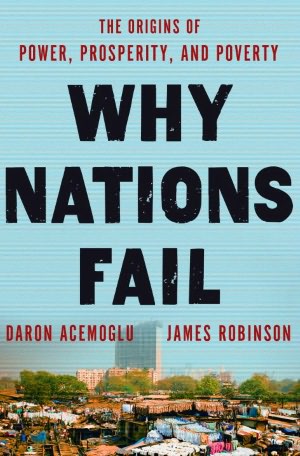
Book review: Why Nations Fail: The Origins of Power, Prosperity, and Poverty


Why Nations Fail: The Origins of Power, Prosperity, and PovertyWe live in an unequal world. Some Nations are rich and some are poor.

In rich countries, individuals are healthier, live longer, and are much better educated. They also have access to a range of amenities and options in life, from vacations, to career paths, that people in poor countries can only dream of. People in rich countries also drive in roads without potholes, and enjoy toilets, electricity, and running water in their houses. They also have typically governments that do not arbitrarily harass or arrest them; on the contrary, the governments provide services, including education, healthcare, roads and law and order. Citizens vote in elections too and have a say in the direction of politics. p44

Poor individuals living in poor countries are not so lucky. They lack the basic necessities that individuals living in rich nations take for granted. The difference is vast.

Understanding why these differences exist and what causes them is Daron Acemoglu and James Robinson's focus in this book.

Developing such an understanding the authors write, ‘is not just an end in itself, but also a first step in generating better ideas about how to improve the lives of billions who still live in poverty.’

So why do poor nations get it wrong and the rich nations get it right?

Poor countries are poor because those in power make choices that create poverty. The opposite is true for why rich nations get it right.

 Countries differ in their economic success argues Acemoglu and Robinson because of their different institutions, the rules influencing how the economy works, and the incentives that motivates people. Thus nations fail today because their extractive economic institutions do not create the incentives needed for people to save, invest and innovate.

Acemoglu and Robinson uses North Korea and South Korea as an example:

Imagine teenagers in North and South Korea and what they expect from life. Those in the North grow up in poverty, entrepreneurial initiative, creativity, or adequate education to prepare them for skilled work. Much of the education they receive at school is pure propaganda, meant to shore up the legitimacy of the regime; there are few books, let alone computers. After finishing school, everyone has to go into the army for ten years. These teenagers know that they will not be able to own property, start a business, or improve their living standards even if many people engage illegally in private economic activities to make a living. They also know that they will not have legal access to markets where they can use their skills or their earnings to purchase the goods they need and desire. They are even unsure about what kind of human rights they will have. P68

Acemoglu and Robinson also rejects the common hypothesis that people have often assumed was the major cause of why nations fail. They reject the geography hypothesis, the cultural hypothesis and the ignorance hypothesis and in their place they argue that to understand world inequality we have to understand why some societies are organised in very inefficient and socially undesirable ways.

Acemoglu and Robinson present historical evidence from the Roman empire, the Mayan city-states, the Soviet union, Latin America, Europe, United State and Africa to show that the way these nations were organized were instrumental, in fact, highly critical, of the success of the Nations.

Confucius once said, ‘in a country well governed poverty is something to be ashamed of and in a country badly governed wealth is something to be ashamed of.’ Aristotle the grand father of western philosophy also once said that ‘poverty is the parent of revolution and crime’. Echoing and personally agreeing with the words above and with Acemoglu and Robinson earlier sentiment that poor countries are poor because those in power make choices that create poverty.

Leaders need to make choices that creates wealth for the people not just the elite, and have good economic institutions created through politics and political institutions or else as history as shown, (e.g the Arab spring, the American revolution and countless other revolutions) that poverty is the parent of revolution and crime.

Purchase book here: http://www.barnesandnoble.com/w/why-nations-fail-daron-acemoglu/1110776486


K.Oni

Sunday, 13 May 2012

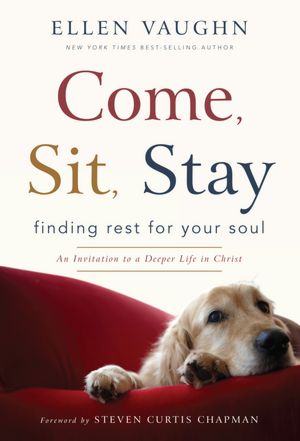
Book review: Come, Sit, Stay

Are you carrying heavy burdens, torn up inside, exhausted and numb, all at the same time? Is there a situation you have prayed over thousands of times and nothing seems to happen? If so, rest your mind on the promise of Jesus in Matthew 11:28, ‘come to me, all you who are weary and burdened, and I will give you rest’. The authour of this timely devotional Ellen Vaughn does exactly this, she rested and welcomed the invitation of Jesus. She describes her experience in these words when she heeded the invitation of Jesus:


Come, Sit, Stay: Finding Rest for Your SoulAs I walked, I actually focused on Jesus’ invitation. I took it apart word by word, chewing on it, meditating on it. I walked on, looking out over God’s good ocean, and that old verse from Mathew 11 became real in a new way. I saw a glimpse of Jesus; I heard his invitation to come. I could almost see his arms open wide. I felt his grace. This wasn’t about me being “good enough” to come; it was all about his love. A kaleidoscope of color and meaning swirled from his words. I smelled a whiff of sea breeze hope. Tears rolled down my face.

This devotional is Ellen’s sweet experience of what she discovered in her experience of resting in Christ and chewing over word by word what Jesus intended in Matthew 11:28 and what great benefits and blessing we can possess when we simply believe that promise.

Come, Sit, Stay has refreshed my mind and brought me to come to Jesus without fear, to sit at his feet without worry and to stay with him without ever being forsaken. Whether you feel your soul to be amidst a terrible storm or you feel your soul to be fast asleep sailing on the clear blue ocean, this Spirit filled devotional will warm your heart to the continual surpassing joy and rest there is with Jesus. Come, Sit, Stay is an invitation to deeper life in Christ.

Ellen Vaughn does a better job in introducing her own book. Watch the video below

Purchase book here: http://www.barnesandnoble.com/w/come-sit-stay-ellen-vaughn/1109573043

I wrote my own little devotional with the same title inspired by Ellen's book. You can read it here: http://countedrighteousinchrist.blogspot.co.uk/2012/03/miscellanies-33-come-sit-and-stay.html

K.Oni

Monday, 7 May 2012

Book review: Fools rush in where monkeys fear to tread


Humour has been lost on most protestant writers but not on Carl Trueman. Fools Rush In is a collection of writings by Trueman, not united by any internal theme beyond being reflections. Trueman’s reflections are insightful and satirical. 


Rodney Trotter who wrote the preface for this book sums up the audience likely to enjoy this book: 


A custard in the face is the funniest thing one man has ever seen; to another, it is a degrading act of physical assault. This book is, I suspect, designed to be enjoyed by the former, and to offend the latter.


I enjoyed, laughed out loud and pondered Trueman’s points. I felt at home, comfortable, entertained, as well as reflect on the seriousness of the irony of modern day evangelical and reformed church culture.


Here are some quotes from Fools Rush In. (I am aware of the dangers of  reading quotes out of context)


When prayers become the equivalent “Yo, how you doing?!” then something has gone awry… how many of us sit in judgment of the sermon, grading it for quality, length, clarity, interest, as the minister brings us the word of God? If we have any grasp of God’s holiness, and any inkling of the importance of the prophetic task of preaching, we wont be giving the minister a grade; rather, we will be sitting and listening to what he has to say, acutely conscious of our own unworthiness to hear God as he speaks to us…. then, when the song we sing can be summarised, ‘Jesus is my best boyfriend’ we can be sure that something is seriously out of joint.  -something is missing - a sense of the deep holiness of God. p65


So why did the markets not stop the problem? After all, according to some conservative pundits, the markets are like the force of gravity-neutral, impersonal, scientific, perpetually moving toward an economic equilibrium that promote freedom, prosperity, and all-round good health -social, cultural, and above all financial. The answer, of course, is that market forces are ultimately functions of human behaviour, albeit on a macro-level; and human beings as depraved and as blinded as they are, generate market forces that reflect that depravity. P88


It is not a financial bailout that is needed; it is individual repentance by countless thousands of people. 


I am not much of a web wanderer but on the odd occasion I do a bit of web surfing, I am struck by how many Christians, pastors, professors, and laity have blogs, face book and twitters going. How many million Christian hours are wasted writing this stuff, engaging in mindless blog treads, and telling the world about personal trivia? And what does it tell us about the expansive visions and ambitions out there? Apparently the world is now everyone’s birthright. P91 


When I see Christians blogging so much, I wonder how many sermons are being prepared on the fly because of lack of time, how many parishioners go unvisited, how many prayers remain unsprayed, how many words of love and affections to spouses and children are never said, how many books - let alone the bible-are left unread, and how many fellowship atrophy through lack of any real, meaningful social and spiritual intercourse. Indeed, to summarize: how many online communities (sic) prosper to the detriment of the real, physical communities into which the Lord has placed each and every single one of us? How many complain of the insufficient time to do the boring routines of the Christian life- worship services, Sunday school, visiting the sick and the aged, fellowship, bible reading, prayer - and yet always somehow manage to fit in a quick twitter or blog or pod cast or change their face book status? P92


The world also teaches that everyone is special, has a unique contribution to make, and must have a prize of some kind. All people need to tell the world about their greatness, their uniqueness…. This belief that we are each special, by and large is complete tosh. Most of us are mediocre, make unique contributions only in the peculiar ways we screw things up, and could easily be replaced as a husband, father, or employee by somebody better suited to the task.  P116


…far to many Christians have senses of destiny that verge on the messianic. The confidence that the Lord has a special plan and purpose just for them shapes the way they act and move. Now, just for the record, I am a good Calvinist, and I certainly believe that each individual has a destiny: what concerns me is the tendency to always think of ourselves as special and unique (which we all are in some ways- DNA, etc.) bleeds over into a sense of special identity whereby the future, or at least the future of myself, comes to be the priority and to trump all else.... Church is the meaning of human history not just an individual. It is the church that is the big player in God’s wider plan not me. P116


I highly recommend the purchase of this book especially if you enjoy humour. I promise you will eventually LOL. 


K.Oni


Purchase book here: http://www.prpbooks.com/Fools-Rush-In-Where-Monkeys-Fear-to-Tread-2191.html&session=9a62ae8d65b23b6fb6b38525d5c4ed91

Book review: Solid Ground


Over the past decade or so, some within evangelicalism have begun to question the uniqueness of the Bible. Those who question the uniqueness and inerrancy of the bible have suggested that we ought to treat the bible as a book (special) but not as the unique book that perfectly illumines all things. God’s overall authority is brought into question; his glory is diminished as Scripture is not all God-breathed. The essays featured in this book explore that glory by unfolding the richness and perfections of the triune God. Contributions to this book includes well-known figures such as R.C Sproul, J.I Packer and Mark Dever. A thorough convicting defence is presented for the church to return to its central, long-standing, and vital conviction that the bible is the Word of God, and so without error in its original autographs, the only infallible rule of faith and practice.

Mark Dever writing about the importance of the Word in the Church especially the centrality of preaching states “I know that some today are suggesting that we need a less rational, more artistic, less authoritarian and elitist, more communal and participatory way of communicating Gods truth than this ancient way of one person standing there giving a monologue, while others sit and listen in silence. Such a critique of preaching is being made by many today, including evangelical authors. I think the ‘ancient method’ may be especially appropriate today, however given our isolating subjectivist, anti-authority, confused and confusing culture. Given this, there is just something downright appropriate about Gods people gathering and all closing their mouths, opening their ears, and listening to one person preach. Not just tell stories about his relationship with his kids and his dog, but actually preach God’s word to God’s people”.

Preachers should be driven by God’s word and not tend themselves to the itching ears of the audience.
If preachers don’t preach expositionally, they will never preach more than they already know, and constant topical subject may also lead the congregation to be conformed to the preacher’s mind rather than to God’s mind. Preachers ought to preach the word for in the history of revivals, preaching has been the principal means for revival.

The church need to stand on the authority of the Bible and maintain its uniqueness. Scripture is the Churches only infallible rule of faith and practice, without it, there is no ultimate authority. Everything becomes arbitrary.

Some may argue that Scripture itself is ambiguous to which Martin Luther would reply, “If scripture is obscure and ambiguous, what point is there in God given it to us? Are we not obscure and ambiguous enough without having our own obscurity, ambiguity, and darkness augmented for us from heaven”. God will always make good of his words and “there is nothing in scripture so plain that some men have not doubted it”.

Do you believe Scripture is the only infallible rule of faith and practice? If yes this book will help solidify your convictions, and if negative or unsure, this book will help you see the reasons why you ought to believe in the inerrancy of scripture.

K.Oni

Purchase book here: http://www.prpbooks.com/Solid-Ground-The-Inerrant-Word-of-God-in-an-Errant-World-2187.html


Tuesday, 24 April 2012

Book Review: A brief history of Old Testament Criticism


The aim of this book according to the authour ‘is a brief introduction to orient students and interested readers to the field while pointing them on to further study and inquiry.’

The athour accomplishes his purpose because reading this book has opened my mind to the history of Old Testament Criticism and to some of the major contributors in Old Testament historical and literary developments.

This book introduces the reader to seven major figures who contributed somewhat to Old Testament criticisms. Gignilliat approach is to focus on the life and work of these seven figures rather than just talk about their critical theories, although, in detailing briefly about their life and work, Gignilliat focuses specifically on the works which contributed to Old Testament criticism. This approach I found to be helpful because the figures behind the criticisms can be seen as people who genuinely struggled or in some cases were seeking to understand the biblical text even though they skewed from the orthodox outlook. For example, De Wette (Famous for his religious history approach of understanding the Old testament) writes of his own conversion:

An un-forgetful outward circumstance occasioned the happiest revolution in my inner life and gave me back the peace I had lost. The imperfect, cloudy faith of my childhood was replaced by one higher and better, the remembrance of God awoke in my heart to new life, and belief in immortality returned in a higher transformed form. Now theology was for me no longer cold, grim moral censor, nor even merely a daughter of history; it increasingly rose up before my eyes to higher, heavenly majesty, to divine dignity.

A fantastic religious experience for De Wette and yet I would disagree with his view or approach to the Old Testament. For de Wette, the historical character of the old testament has to do with the religious makeup of the various authours and redactors actually composing or compiling the material; it is not historical in any sense of reporting the events as they actually occurred.

Later Old Testament critics challenge De Wette’s approach such as William Albright and Brevard Childs who argues for the essential historical character of the old testament narratives was integral to the authority of the bible, even if the reporting of the events in the old testament was blurry in details.
For Brevard Childs, it was essential to retain the divine authority of Scripture where earlier critics elevated the human authors and their context higher than the divine authority. Where other critics have sought to find the true meaning of Israel’s religion behind the canonical text such as Welhausen who argues that  much of Israel’s early religious life was lost when Judaism formalised the law code, which in turn displaced ancient Israels more natural and intuitive worship. Childs counters this position by advocating the significance of the final form of the biblical text is that it alone bears witness to the full history of revelation. Thus the biblical texts are the locus of revelation and not the events in and of themselves apart from God’s revealed wisdom regarding their significance.

The seven major figures surveyed in this book are Benedict Spinoza (1632-1677). W.M.L De Wette (1780-1849), Julius Wheelhouse (1844-1918), Herman Gunkel (1862-1932), Gerhad Von Rad (1901-1971), William Foxwell Albright (1891-1971), and Brevard S. Childs (1923-2007).

This book is not a comprehensive attempt at expounding the very complex history of the Old Testament interpretation.

I will finish this review with a quote from Herman Bavink on how we should view scripture:

Scripture, accordingly, does not stand by itself. It may not be construed deistically. It is rooted in centuries long history and is the fruit of God’s revelation among the people of Israel and in Christ. Still, it is not a book of times long past, which only links us with persons and events of the past. Holy Scripture is not an arid story or ancient chronicle but the ever-living, eternally youthful word, which God, now and always, issues to his people. It is the eternal ongoing speech of God to us. It does not just serve to give us historical information; it does not even have the intent to furnish us a historical story by the standard demanded in other realms of knowledge. Holy scripture is tendentious: whatever was written in former days was written for our instruction, that by steadfastness and by the encouragement of the scriptures we might have hope (Romans 15:4). Scripture was written by the Holy Spirit that it might serve in guiding the church, in the perfecting of the saints, in building up the body of Christ. In it God daily comes to his people, not from afar but from nearby… it is the living voice of God….divine inspiration, accordingly, is a permanent attribute of Holy Scripture. It is not only God-breathed at the time it was written; it is God breathing.

Purchase A brief history of Old Testament Criticism at: http://zondervan.com/9780310325321

K.Oni


Book review: My name on his tongue


my name on his tongue“…Until I found 
That Home
Is inside
Not out
That the view changes 
Depending
Where I sit
Which window
I look out of


Mixed blood 
Is like an old trailer 
that’s always frowned at
Because no matter where 
It’s parked
It’s always 
Out of place…”

Laila Halaby was born in Bierut, Lebanon, to a Jordanian father and an American Mother. She speaks four languages, won a Fulbright scholarship to study folklore in Jordan, and holds a master’s degree in Arabic language. In addition to writing novels, Halaby also write poetry and children’s fiction. My name on his tongue is a book of poetry where Halaby addresses the issues of identity, belonging, race, war, childhood, motherhood and friendship.

Halaby’s genius comes through in her seamless ability to transfer the reader into her world without the reader necessarily possessing a knowledge of her past. Each poem is self-sufficient, clear and personal.

The book is divided into four parts viewed from Halaby’s perspective: as a tourist, a child, an exile, and an opponent of war in the middle east. At the end of the book, Halaby includes a letter she posted to the new elected president, Barack Obama, identifying with him by touching on their similarities (both mixed race) and urging Obama to consider the plight of the Palestinians in Gaza.

I rarely read a large collection of poetry by one single authour as I am accustomed to purchase poetry books which are more dominated by themes than one single authour’s experience and Journey. Halaby’s book was a delightful experience into understanding her struggles and thoughts of her own cultural identity; one which I can relate. A must read for lovers of poetry, and her use of imagery and punctual words awaken the world which Halaby details in the mind of the reader. She inspired me to write two of my own poems: My new home and Why don't we sit outside, (click on the title to view).

“Arabs maybe under suspicion
But now we are interesting too
It is time for our voice to be a part of America’s ethnic fiction….”

Purchase book here: http://www.syracuseuniversitypress.syr.edu/spring-2012/my-name.html

K.Oni

Friday, 9 March 2012

Book Review: The Resignation of Eve: ‘What if Adam’s rib is no longer willing to be the church’s backbone?


The role of women in the church is a serious topic. There’s a lot of confusion writes Jim Henderson among both men and women about what the bible does or does not say about the role of women in the church. Women struggle (often in private) trying to determine whether their churches’ position on women’s roles are genuinely ideal or simply a reflection of dogmatic conditioning and cultural bias. Jim Henderson encourages the discussion of these issues without the need to ‘break up’ over every biblical disagreement. Jim believes that this attitude needs to begin with pastors. 


This book documents the stories of women’s responses to how they have been treated by the church. It mostly consists of interviews with or stories of women who have resigned themselves to their church situation, or resigned from church, or have re-signed themselves to a place where they are more valued and are able to use their gifts by engaging, influencing and leading. 


Resigned to their church -  Women who have come to terms with the fact that they are not ‘allowed’ to exercise all the gifts and abilities they’re capable of contributing in the church setting. Some say they are perfectly fine with this reality. 


Resigned from - How would you feel if you were capable of leading, thinking, guiding, shaping, and forming a spiritual community but where denied the opportunity to do so? This experience leads some women to walk away from the church, Christianity and in some cases God. On a side note, whilst agreeing that these limitations can contribute to a women walking away from church, yet if she walks entirely away from God, denying his existence till her death, then I would question whether she really did at first belong to Jesus. For Jesus says, ‘no one can snatch them away from my hands’ and Paul writes that ‘those whom God calls, he will also glorify.’


Re-Signed - This is the decision some women make, knowing the limitations, knowing the risks and knowing that things are not likely to change. Women who ‘re-sign’ don’t quit or accept things as they are; they lead, engage and influence. 


Jim Henderson notes that ‘the percentage of women Hollywood rewards for using their brains correlates closely with the percentage of women the church allows to be senior pastors’ pg 242. He concludes that ‘when you see these same patterns in diverse systems, it makes one wonder if what we are dealing with isn’t a gender issue at all. Maybe its more primal than that. Maybe it’s a power struggle’ pg 242. 


Jim Henderson wants to see equality in the roles offered to men and women in the church. Gender should not be an issue but if a woman has the gift to lead, the Church should not hinder her progress by limiting her role only to children’s church and woman ministries. Jim appeals to Pastor Cho’s example who has the world’s largest church in South Korea. Jim Henderson highlights that Cho’s church growth has largely been due to Cho’s early decision in his ministry to use woman in leadership. Out of 50,000 cell groups in Pastor Cho’s church, 47,00 (94 per cent) are women. A staggering statistic which has transformed (perhaps could be the reason) of the cultural revolution in South Korea in the 70s and 80s. 


Jim Henderson also appeals to Jesus’ choice of appearing first to a woman before he appeared to the disciples. A counter-cultural move and perhaps the church should exemplify this way in how Jesus released women from their bound shackled positions in society.


A book to read for all who are interested in women’s role in the church and it offers real life stories of women who have struggled with this issue. This book does not provide an exegesis or a biblical exposition for women’s role - it simply details and analyses real life experiences and statistics drawn from women whom the author interviewed and engaged with. 


A quick passing comment on the sub-title of the book is ask yourself or your church this question, 'What if all the women in your church decide not to turn up on Sunday. What activities will have to close or what would Sunday church look like?


Purchase the book here: http://www.amazon.com/Resignation-Eve-Willing-Churchs-Backbone/dp/1414337302/ref=sr_1_1?ie=UTF8&qid=1326641929&sr=8-1


K.Oni

Monday, 27 February 2012

Book Review: What Every Man Wishes His Father Had Told Him


book title frontThis book challenges Fathers to be fathers to their sons by calling men to love Jesus which will make them real men. Byron Forrest Yawn presses various issues about manhood and masculinity through the filter of the gospel, being shocked in his survey on biblical manhood at the lack of the mentioning of Jesus Christ. Yawn radically affirms that Masculinity cannot make sense without the cross and that what the church needs are warriors of the gospel of Christ not boys trapped in men’s bodies. Manhood is the most complete in that image of Jesus, the maker of heaven and earth, on his knees like a commonplace servant washing the disciples feet. Pastors are to install this view of Manhood into the young men in the churches and Fathers should not neglect their responsibilities in being spiritual leaders in the home.

Byron Forrest Yawn talks about men in marriages and raising a family. He writes of men thinking about their own leadership at home that the question isn’t. ‘I’m I a leader?’ but do I take pleasure in sacrificing my own needs to meet those of my wife?’ How one answers this question may reveal the selfishness or one’s lack of grasping what the gospel is. Also Yawn says of chastity, the question is not ‘are you chaste’.  Impurity is a matter of the heart. The real question is ‘why are you chaste’. Because of moral pleasure? Because the opportunity to be impure has not presented itself. Because your parents and peers keep a close eye on you. Or because you believe what God has said about sex? This type of questions enables one to search the motivation within ones heart whether it is Christ driven or self pursuing.

Fathers are to teach their kids and take time to explore life with their sons and find out what their dreams are together not to neglect their sons to find it out for themselves. Sons are to be taught about sex and are to know that fulfilling sex  - as God intended it  -results from a consistently sacrificial relationship built on the principle of unconditional love.

Writing about friendships Yawn writes that there could be other reasons men don’t invest in friendships. Maybe they have something to hide. Namely, themselves. Some men may be to embarrassed to expose the realities lurking in their personal and spiritual life. The shallowness of their soul. The ineptitude with the basic of the Christian life. They don’t know how to lead their wives. Their finances are a mess. They are a failure in business and etc. Uncovering their struggles to another person seems the most frightening prospect they can imagine. Squaring with reality would be the hardest thing they’ve ever done. The risk is too great.

This book I highly recommend for all men to read whether a Father or not for it prepares you to abstain from grave mistakes that some Fathers make in raising their sons and if a Father this book helps you uncover the responsibility of your role in raising your sons and preparing them for life and biblical manhood. Yawn writes ‘The majority of men start discovering at forty what someone should have told them at eight. By the time we realize these hidden wrinkles, the’ve already done their damage. And they’re hard to untangle.


“Above all else, sons need to know their fathers love them. Every son needs to hear his dad say ‘I love you’. Its not really optional. This is especially true when it’s hardest to say - when their sons fail or disappoint” p56.

What Every Man Wishes His Father Had Told Him can be purchased at: http://harvesthousepublishers.com/book/what-every-man-wishes-his-father-had-told-him-2012/


K.Oni

Book Review: Another Man's war


Another Man's War: The True Story of One Man's Battle to Save Children in the SudanDeath hides in the tall grass of South Sudan. What looks like an empty landscape can explode at any moment is the constant environment Sam Childers finds himself in when He is away from his own family to fight another man’s war in a country not his own. Another man’s war is Childers way of explaining his life mission of what God has called him into, luring him away from his chaotic background. Another Man’s war is a thrilling read which documents Childers exciting dark past to his exciting life-giving action packed present, which he aims to protect and provide for orphanage kids who have been victims of  Joseph Kony’s Lord Resistance Army.

Childers believes in fighting back and understands some people will say “I don’t believe Jesus would fight”. Childers agrees and responds by saying “He probably wouldn’t. He turned water into wine. He’d handled it some other way. I’m no theologian but I know what I know. The fighting we’ve done in Sudan and Uganda has produced an oasis of peace and safety in a very dangerous part of the world. If you were to visit there today you could see it for yourself” p115.

One aim of this book is to raise awareness for his work and he comments on the uselessness of some of the rich organizations to go to the difficult places: “What I want to know is why its easy for a big organization to get millions of dollars through the system, only to end up afraid to deliver the goods, while an organization like mine that is not afraid of war and is willing to go over and beyond to save lives has to struggle so hard with only what we raise ourselves” p71. Sam Childers and his crew of soldiers constantly travel to the dangerous areas in order to supply aid to those whom NGO workers are scared to visit because of ambushes.

Sam Childers is here to fight another mans war, fighting for children and innocent victims who couldn’t fight for themselves, and staying the course until the war was over. His African operation has rescued more than 900 refugees of all ages and in time Childers got involved in a real war between African governments, between lawlessness and right, evil butchery and compassion, brutally brainwashed soldiers and helpless, innocent children. Childers provides a safe house (orphanage) for these children and besides feeding the children and the workers they feed anyone in the neighbourhood who comes at meal time, which adds to about 1500 meals a day.

Sam Childers believes that he is fighting for the children and families God sent him to protect. Fighting for the right than nothing more for them to live in peace, worship in freedom, and wake up in the morning knowing that they’l be alive and safe at the end of it.

Sam Childers also encourages his readers whenever they can to steer the conversation towards people and humanitarian aid rather than worry about oil and relationship with China which seems to concern our governments more than genocide.

You can purchase Another Man's war here: http://www.machinegunpreacher.org/store/media/another-mans-war-book/

K.Oni

Book Review: Real Marriage: the truth about sex, friendship and life together


In Real Marriage: the truth about sex, friendship and life together, Mark and Grace Driscoll openly communicate the reality of their marriage, sharing their difficulties, struggles and success (how they overcame their difficulties) to the world. This book is frank, transparent and pastoral in that it aims to help marriages to stand on the solid rock which is Christ and to be rooted in the Gospel. It emphasises friendship to be a key factor in a good marriage. They write “All the talk about spending time and doing life together, making memories, being a good listener, growing old and taking care of each other, being honest, having the long view of things, repenting and forgiving can be summed up in one word—friendship." Repentance and forgiveness are to be continual in a marriage because both are sinners. A refusal to endure in the willingness to forgive and repent may result in living a bitter marriage and a loveless ordeal. Commenting on the story of John Wesley’s marriage which some biographers have called the “30 years war” the Driscolls write “The painful story of the Wesleys reminds us that there are no loving marriages apart from repentance and forgiveness, Marriage either gets bitter or gets better.”

The book is divided into three parts which have chapters consequently related to the title of the different sections. Part 1 deals with Marriage, Part 2 Sex and Part 3 The last day. Each chapter of the section will appeal to different audiences and because the book is written by the couple, there are different addresses directed to only one part of the sexes. Mark and Grace are complimentarian in their views on marriage but even those with differing perspective can learn and gain an helpful insight into marital issues and how to overcome them biblically.

Part 2 of Real Marriage deals heavily with sex answering questions of what a married couple may do in their marital bed. Mark and Grace list a variety of sexual acts and using three criteria’s to judge whether these acts are permissible. Mark and Grace promote a positive view of sex declaring that sex is a gift from God rather than sex being gross. Sex is to be enjoyed and should be used to God's glory.

Reading this book as an unmarried man, I have enjoyed the openness and frankness of Mark’s and Grace portrayal of their own marriage. In some way it has prepared me for some of the challenges that are likely to occur if one day I do get married and the best ways to prevent some of the problems occurring and how to tackle them when they do. This book has benefits to all, those in marriages and those thinking about marriage. One has to be aware of the explicitness of the details prescribed in chapter 10 where the authors answer questions on what sexual activity are permissible. In approaching these chapters one has to be prepared and guard their heart from wandering into fantasy of what these acts entail but rather if married to talk it through with their wife and if single and know not of these things to seek out their meanings in non-pornographic materials.

Purchase Real Marriage: the truth about sex, friendship and life together at http://www.amazon.com/Real-Marriage-Truth-Friendship-Together/dp/140020383X/?tag=thegospcoal-20

K.Oni

O, Lord

 O, Lord,  The King of everlasting righteousness,  You are the one and only great God. Help me to live a holy life and overcome all of my si...