Friday, 8 June 2012

The discipline of celebration


Friday Night Theology may have popped into your inbox earlier than expected. The short working week following the Jubilee has had a disorientating effect, throwing us out of our natural rhythms. This ‘break’ in the everyday pattern of life has a wonderful effect, allowing us time to be with friends and family, to celebrate and relax.

The discipline of celebration is deeply rooted in a Christian model for life. In the very earliest chapters of the Bible, God takes time out from his work and celebrates what he has done. Leviticus 23 spells out seven annual feasts that Israel were to mark as ‘holy days’ or feast days. They would come before God in the temple, feast and celebrate, rest and remember the stranger. These days were designed to break the pattern of life, to help the people of God remember all that God had done and all that He had promised; where they’d come from and where they were heading. The descriptions of them are strikingly joyful: “And you shall take for yourselves on the first day the fruit of beautiful trees, branches of palm trees, the boughs of leafy trees, and willows of the brook; and you shall rejoice before the LORD your God for seven days.” (Leviticus 23:40)

The celebrations of the Christian church – Easter, Christmas and recently Pentecost – should have the same effect. Our own celebrations: birthdays, weddings, anniversaries, house warnings and goodbye parties can be the same kind of gifts if we celebrate them intentionally, noticing their meanings. Sixty years on the throne for our Queen was a wonderful opportunity for the nation to get together and rejoice, to think about how much has changed and also how much hasn’t. What other opportunities are there to celebrate in your family, church and community?

A Christian vision of the human person and a flourishing society recognises that people are not linear but cyclical. We are not like machines, able to keep going in one direction at one speed until we fall apart. We need rest, time for gratitude, time for community, time for contemplation. We are not pragmatic utilitarians, valuing only outputs and quantifiable gains. Time is not, as the saying goes, money, though it may be wealth.

The discipline of celebration forces us to get out of our rat runs and tram tracks, take a breath and look around us. If the Christian community can model both committed, passionate excellent work and the discipline of celebration, we’ll be pointing to something true and nourishing for us all.

Elizabeth Hunter – Director, Theos - Evangelical Alliance

Lost in the ambiguity of love

Lost in the ambiguity of love 
Stressing over freedom
Tired of friendship 
Caressing the suppressing sunrise 
Enjoying the warmth of the darkness 
Anticipating the end of a fleeting life - 


Kill the dead afternoon
Poison the sleeping beauty
Entertain the amusing canopy
Release this relentless inkling
Craving a selfish pilgrim -


The autumnal sky
Robbed, savaged, banished 
Trampled. 
Unshackled hate unknown to fate - 
Want only to take 
My lostness to find no more in the ambiguity of Love.

K.Oni

An abstract poem about being lost in the ambiguity of love. If the meaning of love remains unknown or rather uncertain to the individual, it is a fleeting life, a selfish pilgrims existence.

Thursday, 7 June 2012

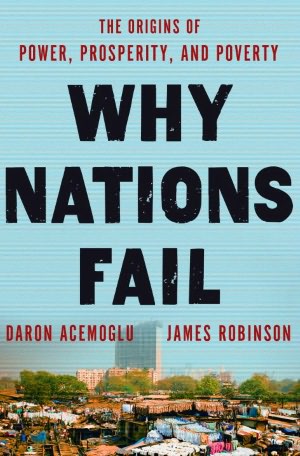
Book review: Why Nations Fail: The Origins of Power, Prosperity, and Poverty


Why Nations Fail: The Origins of Power, Prosperity, and PovertyWe live in an unequal world. Some Nations are rich and some are poor.

In rich countries, individuals are healthier, live longer, and are much better educated. They also have access to a range of amenities and options in life, from vacations, to career paths, that people in poor countries can only dream of. People in rich countries also drive in roads without potholes, and enjoy toilets, electricity, and running water in their houses. They also have typically governments that do not arbitrarily harass or arrest them; on the contrary, the governments provide services, including education, healthcare, roads and law and order. Citizens vote in elections too and have a say in the direction of politics. p44

Poor individuals living in poor countries are not so lucky. They lack the basic necessities that individuals living in rich nations take for granted. The difference is vast.

Understanding why these differences exist and what causes them is Daron Acemoglu and James Robinson's focus in this book.

Developing such an understanding the authors write, ‘is not just an end in itself, but also a first step in generating better ideas about how to improve the lives of billions who still live in poverty.’

So why do poor nations get it wrong and the rich nations get it right?

Poor countries are poor because those in power make choices that create poverty. The opposite is true for why rich nations get it right.

 Countries differ in their economic success argues Acemoglu and Robinson because of their different institutions, the rules influencing how the economy works, and the incentives that motivates people. Thus nations fail today because their extractive economic institutions do not create the incentives needed for people to save, invest and innovate.

Acemoglu and Robinson uses North Korea and South Korea as an example:

Imagine teenagers in North and South Korea and what they expect from life. Those in the North grow up in poverty, entrepreneurial initiative, creativity, or adequate education to prepare them for skilled work. Much of the education they receive at school is pure propaganda, meant to shore up the legitimacy of the regime; there are few books, let alone computers. After finishing school, everyone has to go into the army for ten years. These teenagers know that they will not be able to own property, start a business, or improve their living standards even if many people engage illegally in private economic activities to make a living. They also know that they will not have legal access to markets where they can use their skills or their earnings to purchase the goods they need and desire. They are even unsure about what kind of human rights they will have. P68

Acemoglu and Robinson also rejects the common hypothesis that people have often assumed was the major cause of why nations fail. They reject the geography hypothesis, the cultural hypothesis and the ignorance hypothesis and in their place they argue that to understand world inequality we have to understand why some societies are organised in very inefficient and socially undesirable ways.

Acemoglu and Robinson present historical evidence from the Roman empire, the Mayan city-states, the Soviet union, Latin America, Europe, United State and Africa to show that the way these nations were organized were instrumental, in fact, highly critical, of the success of the Nations.

Confucius once said, ‘in a country well governed poverty is something to be ashamed of and in a country badly governed wealth is something to be ashamed of.’ Aristotle the grand father of western philosophy also once said that ‘poverty is the parent of revolution and crime’. Echoing and personally agreeing with the words above and with Acemoglu and Robinson earlier sentiment that poor countries are poor because those in power make choices that create poverty.

Leaders need to make choices that creates wealth for the people not just the elite, and have good economic institutions created through politics and political institutions or else as history as shown, (e.g the Arab spring, the American revolution and countless other revolutions) that poverty is the parent of revolution and crime.

Purchase book here: http://www.barnesandnoble.com/w/why-nations-fail-daron-acemoglu/1110776486


K.Oni

Monday, 4 June 2012

Virtuous governance

There’s something beautiful about longevity. This four-day weekend, a range of events will mark the Queen’s Diamond Jubilee – 60 years on the throne. We’ll watch the Thames Diamond Jubilee Pageant, take part in the Big Jubilee Lunch, and enjoy the Jubilee Concert. The final day of the long weekend will be marked by a service of thanksgiving at St Paul's Cathedral attended by the Queen and the Duke of Edinburgh, during which aspecial prayer will be offered for her.
 
The Psalmist muses that those who dwell in the shelter of the only true Sovereign and rest in His shadow will be satisfied with long life and shown His salvation (Psalm 91). It reflects the shalom intended for humanity. The contrast with lives that were brutally cut short in recent weeks could not be starker. Dark shadows were cast when 49 children were killed in the Houla region and six kids died in Derby when their house was set on fire. Longevity and shalom seem light years away from these tragedies.
 
The Catholic mass to commemorate the Diamond Jubilee also contains a special prayerfor the Queen, requesting that in her governance she continue to grow in every virtue.In his book Virtue Reborn, N.T. Wright shows that virtue occurs when our habitual choices have been wise. In Proverbs, wisdom is personified in a woman. Wisdom invites us to come and learn. She will keep and guard us and place a graceful garland, a beautiful crown on our head (4:9).
 
Wisdom is needed to be genuinely human and therefore vital to good governance. Whether our vocation concerns governance of the family, classroom, boardroom, city, or nation, we need to be virtuous people. The woman in Proverbs 31 is such a gem. A home-maker, entrepreneur and artisan whose character is noble and whose heart is big. She loves her work, her family and those in need. She mentors with sound advice. A diamond with many facets. Undoubtedly, the fear of the Lord is the beginning of her wisdom. No wonder her husband is proud of her. His praise crowns her virtuous life.
 
Solomon started as a virtuous leader, who did not ask for himself long life or riches, but understanding to discern what is right. In response, God promised him a wise and discerning mind (1 Kings 3:11-14). Yet, much was lost along the way and, subsequently, dark shadows were cast instead of light. N.T. Wright asserts: “From a Christian point of view, then, virtue cannot be conceived solely in terms of the individual journey from a standing start to a future destination. It belongs within an end that has already begun, an eschatology that has already been inaugurated.”
 
If like the woman in Proverbs 31, we want to smile at the days to come, we need to grow as virtuous worshippers, allowing wisdom to shape all facets of our life into the diamond He has in mind. Each life individually highlighting the beauty, relevance, joy and compassion of the Christian life and the enduring hope for God’s suffering world; and collectively, even more so.
 
Enjoy the party in honour of the Queen. Beyond that, may we live long lives in honour of the King and see His salvation.
 
Marijke Hoek, coordinator Forum for Change - Evangelical Alliance

C. S. Lewis on Queen Elizabeth II


Permalink

Queen Elizabeth II was crowned on 2 June 1953 in London. C. S. Lewis chose not to attend the festivities because the weather was not great, because he did not like crowds, and because he was not in the mood to dress up. Instead he stayed at home and watched the event on TV (it was the first fully televised coronation).

A month later Lewis reflected on the coronation in a letter to a friend (Letters, 3:343):

You know, over here people did not get that fairy-tale feeling about the coronation. What impressed most who saw it was the fact that the Queen herself appeared to be quite overwhelmed by the sacramental side of it. Hence, in the spectators, a feeling of (one hardly knows how to describe it) — awe — pity — pathos — mystery.

The pressing of that huge, heavy crown on that small, young head becomes a sort of symbol of the situation of humanity itself: humanity called by God to be His vice-regent and high priest on earth, yet feeling so inadequate. As if He said, ‘In my inexorable love I shall lay upon the dust that you are glories and dangers and responsibilities beyond your understanding.’

Do you see what I mean? One has missed the whole point unless one feels that we have all been crowned and that coronation is somehow, if splendid, a tragic splendor.

by Tony Reinke

Sunday, 3 June 2012

Miscellanies 45 - Love your enemies


I am called to do good to all people in all situations and stations of life - what does that mean? It means that to the murderer, the rapist, the dictator, yes, even the likes of Hitler and Stalin I must do good to them. Of course exceedingly I hate their deeds but I must love them still for it is written by Him to whom all men at last will desire to flee towards, ‘Love your enemies.’ Yes, these words are as clear as the day at hand; everything is visible, there is nothing hidden. Likewise, these solemn words uttered from the lips of meekness are clear and simple. I am to love my enemies. Of course in loving my enemies I am very much restricted to those of flesh and blood for no where in scripture is it ever commended to love the devil - I am to hate him, yea, and all of his demonic host. But to those who are of my kind I am to love, as well as God himself and everything that is good and proper. From an evil heart flows the mud of hatred, the hatred which is contrary to loving one’s enemies. I am to love those who have a different ideology than I have, though their ideology may be the doctrines of demons and I may render them as heretics, yet, I must never deny them a cold cup of water. If they are in need and I have the power and resource to meet their needs, then I am at once obligated with a great zeal of love to meet it. I must not meet it with a cold hateful heart, but I must meet it with a cheerful heart that has been transformed and overwhelmed by the grace of God for me. For you see, it is also written in that infallible epistle that ‘While we were yet sinners Christ died for us and once we were enemies of God under his divine condemnation yet he so loved us that He gave, yea, absolutely, gave his precious lovely Son for us.’ God your heavenly Father, was kind to you when you was his enemy. He was so kind, hence he calls us to imitate. God in the last day or even so now as he works in his mysterious absolute Sovereignty will pay back evil men for their awful deeds and will be the judge over them. We are to commit all of our anger and indignation to him, like our blessed Lord who when reviled did not curse, but blessed, and on that glorious yet shameful cross, uttered ever so joyfully and yet so tenderly the words, ‘Father, forgive them.’ We are to repeat these words when we see our enemies crucify us, ‘Father forgive such a such for the awful undeserved thing that they have done to me’. Repeat these words now in your soul then say the names of your enemies and ask your heavenly Father if you so love him that he may forgive them too. Then, where is the residence for hatred, anger and bitterness? There will only be room for pity, love and mercy. Stray not to far my dear brothers and sisters from the ways of Christ, stay close to him, take his yoke upon you, the light yoke of loving your enemies than your own heavy oppressive chain of hatred and bitterness.

K.Oni

O, Lord

 O, Lord,  The King of everlasting righteousness,  You are the one and only great God. Help me to live a holy life and overcome all of my si...